

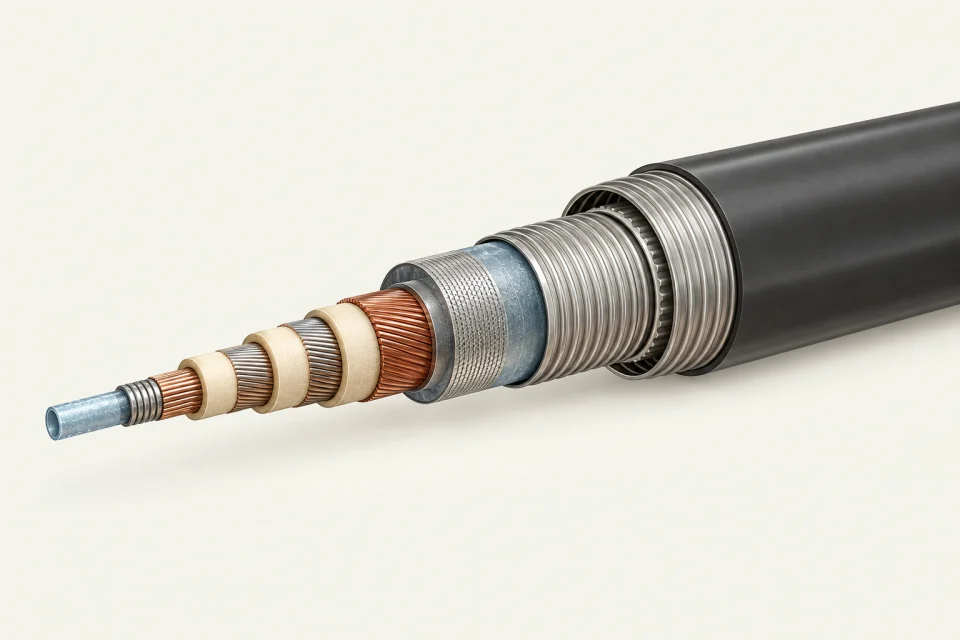
Evaluate the complete system.
High-temperature superconducting conductors carry current with very low electrical resistance when maintained at the required cryogenic conditions. The U.S. Department of Energy describes grid demonstrations that move the technology beyond laboratory research.
The project question is broader than the conductor. Cooling, auxiliaries, terminations, protection and operational support all belong in the assessment.
Is the corridor the constraint?
Define the power requirement, route and credible conventional alternatives. The strongest starting point is a specific capacity or space constraint, with a clear value attached to resolving it.
Include the supporting systems.
Evaluate the cryogenic plant, auxiliary demand, redundancy, terminations, protection and maintenance access. Compare the complete installation under the same operating conditions as the alternative.
Ask for relevant operating evidence.
Request comparable references and model-specific tests. Clarify the parties responsible for the cable, cooling equipment, controls and site integration. Agree measurable acceptance requirements.
Let the site establish the benefit.
Capacity, efficiency, footprint and lifecycle cost require a defined comparison. Ruian treats superconducting transmission as a project-specific evaluation, with supply and delivery responsibilities qualified before a product commitment.
Technical evaluation only; this is not an engineering design or a standard product offer. Suitability, supply and acceptance require project assessment.
Sources checked 29 September 2026. References do not imply partnership or endorsement.